
Oil Painting Canvas: Cotton vs. Linen
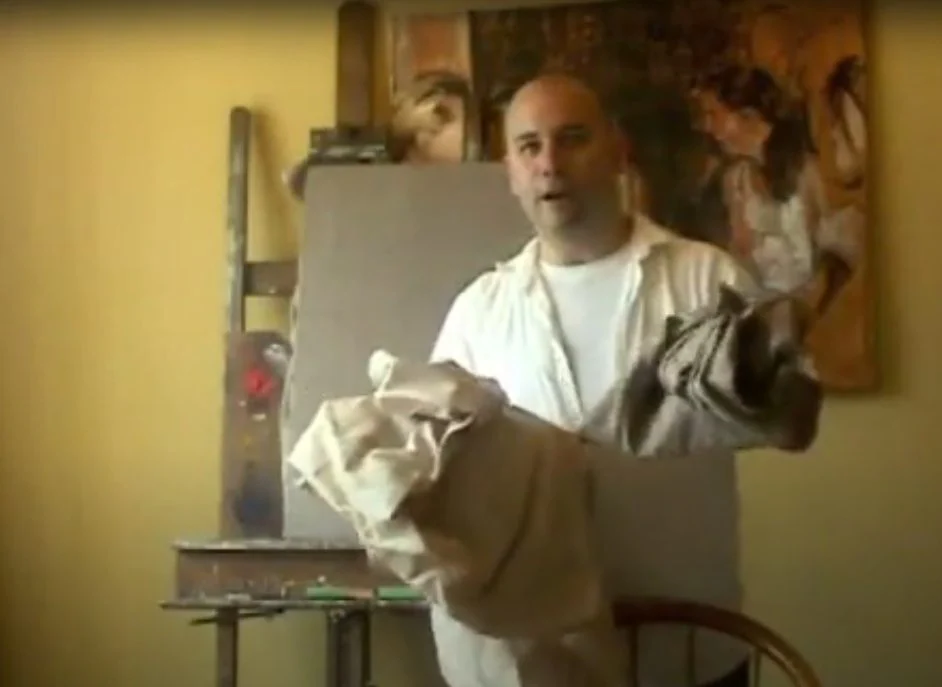
You don’t need linen to make great paintings. Cotton is strong enough for most work. What actually matters is preparing the surface yourself — sizing and priming a stretched canvas — rather than painting on a store-bought pre-primed canvas straight from the wrapper. Please don’t do that.
What a canvas really is
A canvas is your support — the surface that holds up your layers of paint. Historically painters used wood panels; the Flemish masters of the 1400s–1600s, like Rubens, favored wood for its stability and smoothness. But wood warped in humid climates like Venice, and painters there invented the use of stretched fabric. That’s the same basic material we use today.
Cotton vs. linen
Cotton
- Affordable and widely available
- Works well for small and medium paintings
- Comes in various weaves, fine to coarse; thinner weaves are easier to smooth
Linen
- More expensive
- Stronger and longer-lasting
- Preferred for very large or important paintings, like church or public commissions
- Has a distinctive texture many painters like
If you have the budget and want the experience, try linen. For most work, cotton is completely fine.
Preparing your own canvas
- Stretch the raw canvas over wooden stretcher bars.
- Leave extra canvas folded over the back — don’t trim it. That material lets you restretch later if needed.
- The first layer is glue (size). It seals the fibers so the oil won’t rot them.
- After sizing, apply gesso or an oil ground to create the painting surface.
This gives you far more control over the texture and quality of your surface — like cooking from scratch instead of using something prepackaged.
The takeaway
You don’t need linen to make great paintings. If you can afford it, it’s lovely. But cotton is strong enough for most work, and what matters more is how you prepare the surface. Taking the time to stretch and prime your own gives you a stronger, smoother foundation and longer-lasting paintings.
Preparing a canvas properly is one of the first things I teach. The free lessons are here.
Common questions
- Is linen or cotton canvas better for oil painting?
- For most work, cotton is completely fine — it's affordable, available, and strong enough for small and medium paintings. Linen is more expensive but stronger and longer-lasting, preferred for very large or important commissions. What matters more than the fiber is how well you prepare the surface.
- Why not just use a store-bought pre-primed canvas?
- You have no control over the texture or quality of the surface, and cheap ones are often poorly sized. Stretching and priming your own — size first to seal the fibers, then gesso or an oil ground — gives you a stronger, smoother foundation and longer-lasting paintings.
- Why did painters switch from wood panels to canvas?
- The Flemish masters favored wood because it was stable and smooth. But wood warped in humid climates like Venice, so painters there began using stretched fabric instead. That's essentially the same material used today.