
Painting a Street Scene, in Stages
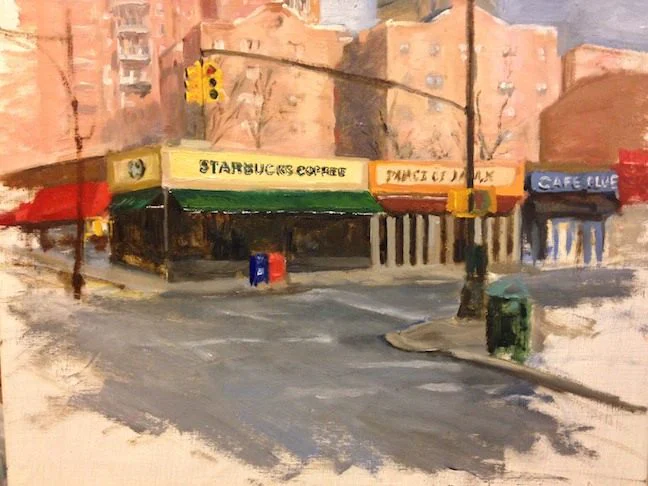
Here is an oil study I did of a street corner, photographed at each stage so you can see how the process works. The key idea: one of the biggest mistakes I see is thinking you draw it once and then carefully fill it in, like a coloring book. That’s not how I paint or teach. Each layer is a refining layer — correcting, adding to, and changing what’s already on the canvas.
When I was an art student — and still now, wandering the galleries at the Met — I always look for clues about how a painting was built, what stages went into it. So here are mine.
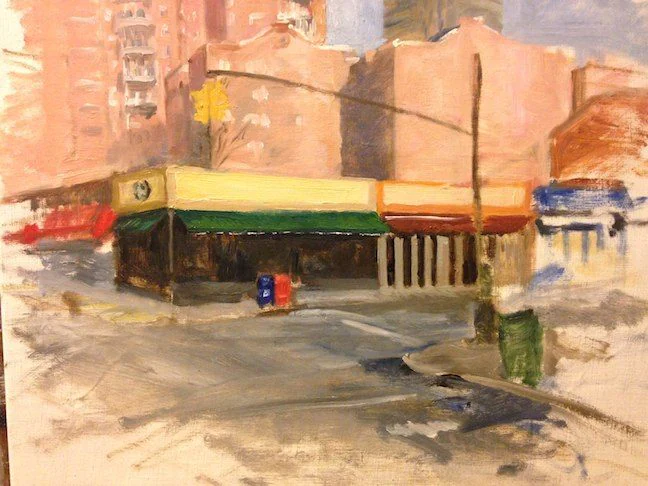
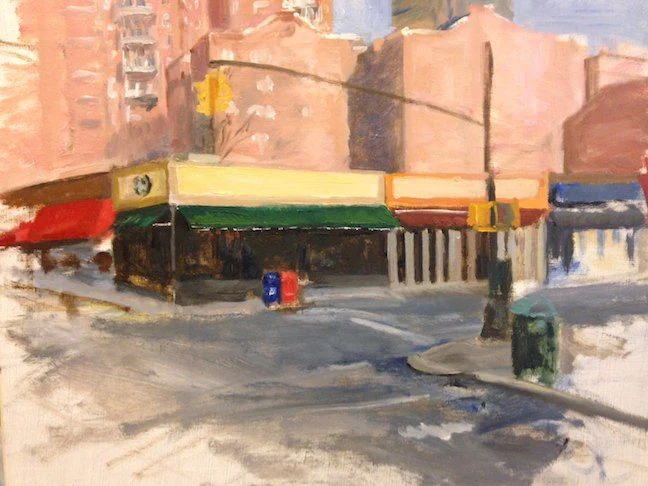
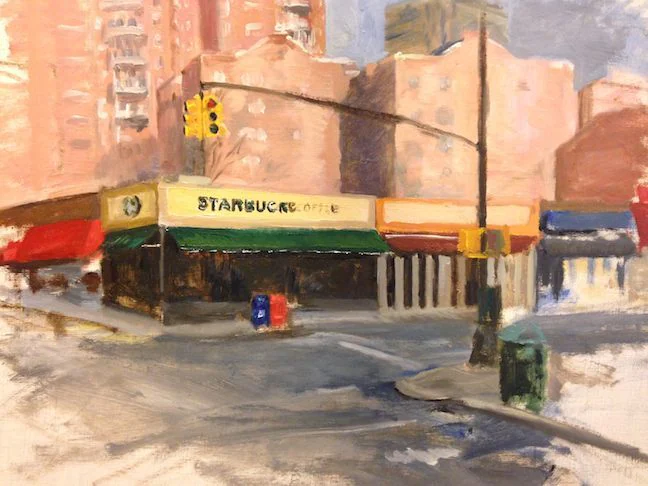
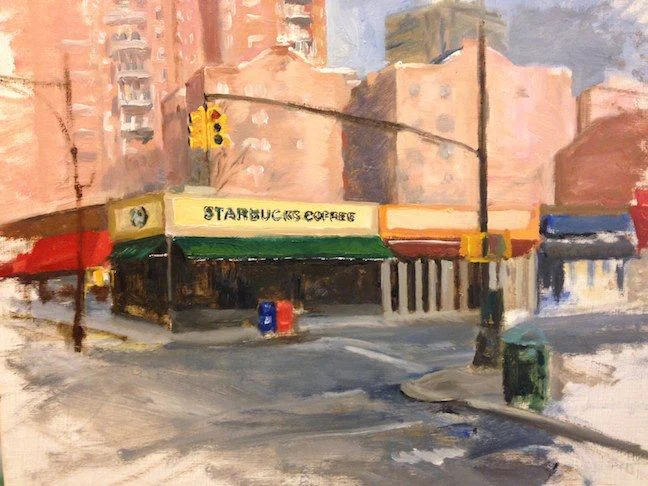
If you want to learn to build a painting this way, the free lessons are here.
Common questions
- How is an oil painting built up in stages?
- It starts with a loose placing/blocking-in stage focused on the large forms, with nothing fixed. Each following stage looks critically at what's already down and refines it — sharpening shapes and color, adding detail, and pushing the focal area — until the picture reads the way you want.
- Should you finish the drawing before you start painting?
- No. Treating the drawing as final and then filling it in carefully, like a coloring book, is one of the most common beginner mistakes. The placing stage is a starting point you keep adjusting; every later layer corrects and changes what came before.