
Why a Different Way of Teaching Oil Painting Is Needed
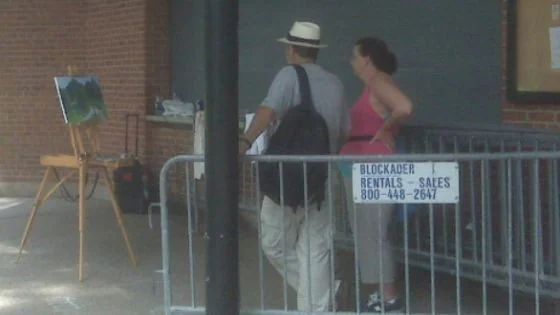
I walked past an outdoor painting class in the park — about eight students at easels doing landscapes — and stopped to listen while the teacher gave one student her turn. What I heard is a good example of why oil painting usually isn’t taught well.
Fixing the drawing
The instructor was pointing out drawing mistakes: a post stuck in the ground should be taller than she’d painted it. That’s a completely standard critique — and it teaches nothing about using oil paint. You don’t need paint to learn to draw; you can use a pencil for that. Yet a lot of oil painting lessons get spent on exactly this.
“Soften that” — but how?
He pointed at the background and said, “You may want to soften that area.” Also standard. But he never told her how to soften.
Then he shifted into what I call paintingspeak: “It’s like a wrestling match — you just have to fight with your canvas and hopefully come out on top.” That’s when I left.
He seemed like a nice guy and she had ability. But ask: how does any of that help her next painting?
- What are the odds her next painting has a post in the ground? Telling her this one should be taller doesn’t transfer. Next time she needs something adjusted, she’ll need him to tell her again.
- Did she know how to soften an edge? Maybe they covered it before — but in what I watched, she was just expected to know.
- The wrestling-match metaphor teaches nothing technical. Maybe “don’t give up.”
What that instruction actually trains is dependence on the teacher to catch her mistakes.
An alternative
If the whole class were working through a defined sequence — a process everyone could reference — teaching and correcting would be far easier. If this were the “veilings and glazes” stage of a known procedure, the teacher and student would be on the same page. You could talk about the color mixture for the glaze, the medium, how to lay the veiling on. The corrections aren’t random; they’re grounded in the process.
I think about learning long addition as a kid:
- Write the numbers stacked on top of each other.
- Add the rightmost column, write the answer below.
- If it’s over 10, write the second digit and carry the 1 to the next column.
- Repeat with the next column until there are none left.
A definite formula. You learned the steps, then practiced on any numbers you wanted. It worked immediately, and you saw results immediately.
That’s how oil painting should be taught — step by step, with a system that makes sense. When a student understands the sequence, they stop depending on random comments. They know where they are, what comes next, and how to adjust. That’s how you build independence as an artist.
That’s what my teaching is built around: the process and formulas of traditional oil painting and the old masters, so you can paint whatever you want — not to copy them, but to use the process to express yourself. The free lessons are here.
Common questions
- What's wrong with the usual oil painting critique?
- It fixes the specific painting in front of you instead of teaching a method. Correcting a drawing error or saying 'soften that' without explaining how leaves the student dependent on the teacher to catch the same problems again next time. It doesn't transfer.
- What should oil painting instruction do instead?
- Teach a repeatable sequence — a process the whole class works through, like the steps of long addition. Then feedback can be grounded in the process ('what medium are you using for this glaze?') rather than random observations, and the student always knows where they are and what comes next.