
Why Your Oil Painting Curriculum Doesn't Exist
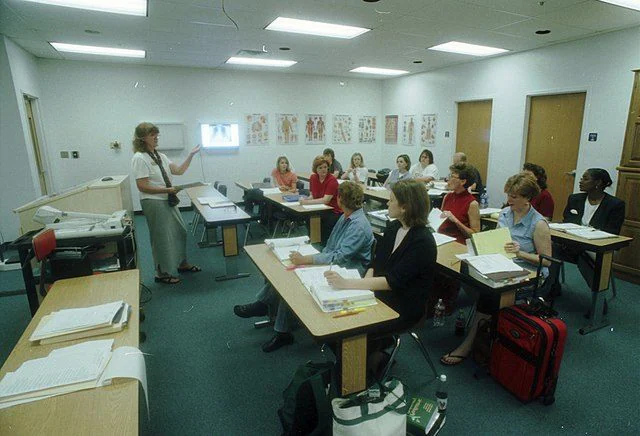
In all my years of oil painting lessons, a curriculum was followed exactly once. Art history lessons always had one. Oil painting lessons, almost never. There are two reasons for that: art is now treated as pure self-expression where the craft is considered unimportant, and painting teachers are rarely taught how to teach.
The night before I wrote this I went to “curriculum night” at my oldest son’s school — where parents meet the teachers and hear how reading, writing, and math will be taught over the year. Sitting there, it struck me how different that is from how painting gets taught.
The one time I had a real curriculum
It was a class that met weekly and covered materials. We got the whole schedule on day one. We ground our own paints — pigment, oil, sometimes other ingredients — and some weeks the entire lesson was one thing: today we grind burnt umber. We got to know that paint inside out: how much oil turns the pigment into usable paint, whether it needs anything else, how to tube it for later.
Reason one: craft is treated as optional
These days art is thought of as a wholly creative, individualistic process. So many things are called art now that teachers are careful not to squash anyone’s individuality — and the craft gets treated as the unimportant part, with the concept as everything.
My reaction to that: nonsense. Learn your craft first. It won’t kill your individuality or your style. Oil painting is still done by hand with materials — it’s a craft — and you have to learn it before you can fully express yourself.
Reason two: teachers aren’t taught to teach
At curriculum night, two teachers who studied education gave a 45-minute presentation on how they’d teach my kids. They were trained to teach.
Ask about your painting teacher: were they trained to teach, or are they a painting teacher because they’re a good painter? The noted art schools — the National Academy, the Art Students League — don’t require a teaching degree, or last I checked, a degree in anything. Teaching painting at a university took a master’s, but not in teaching.
Teaching is a learned skill too. That’s why an oil painting class is usually a group of people winging it, with the instructor doing the “here’s what you’re doing wrong” style of teaching.
The alternative is a class built on an actual sequence you can follow and go back to. That’s what the school is.
Common questions
- Do oil painting classes usually follow a curriculum?
- Rarely. In many years of lessons, Ethan had a real oil painting curriculum only once — a materials class where each week covered one thing, like grinding a single pigment into paint. Most classes are a room of people improvising while the teacher points out what each one is doing wrong.
- Why don't painting classes have a curriculum?
- Two reasons. First, art is now treated as pure individual self-expression, so the craft is quietly considered unimportant. Second, painting teachers are usually hired for being good painters, not for being trained to teach — and teaching is its own learned skill.
- Does learning the craft first hurt your individuality?
- No. Oil painting is still done by hand with physical materials, so it's still a craft. Learning that craft doesn't kill your style — it's what lets you express yourself fully once you have something to say.