

Fixing the Edge on My Front Flower Beds
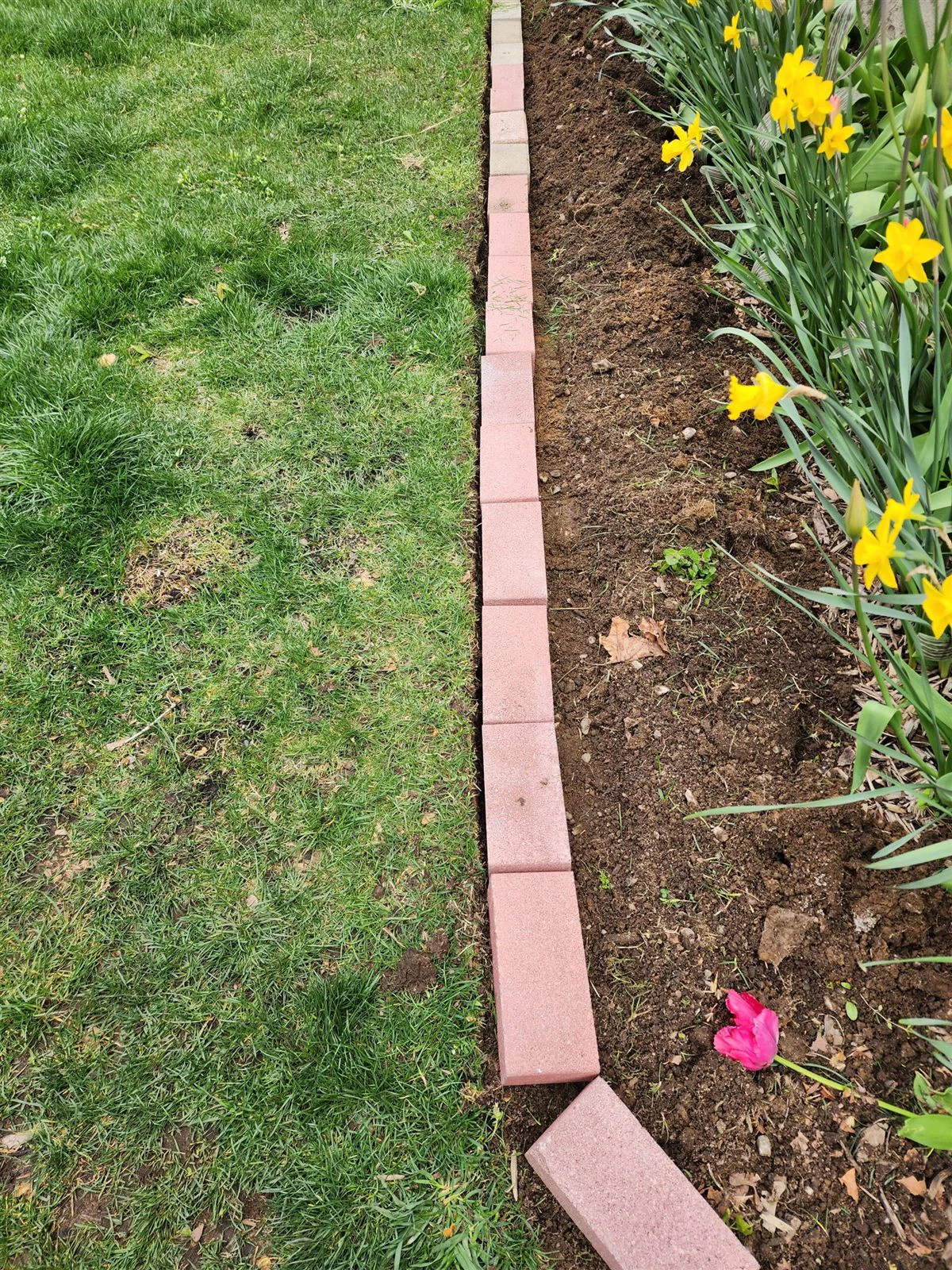
Two overgrown front beds, a stack of edging bricks that never got installed, and daffodils and tulips already in bloom. The fix: lift the bricks, re-cut a clean defined edge with a half-moon edger, then reset the bricks slightly raised so they read as a decorative frame rather than disappearing into the lawn.
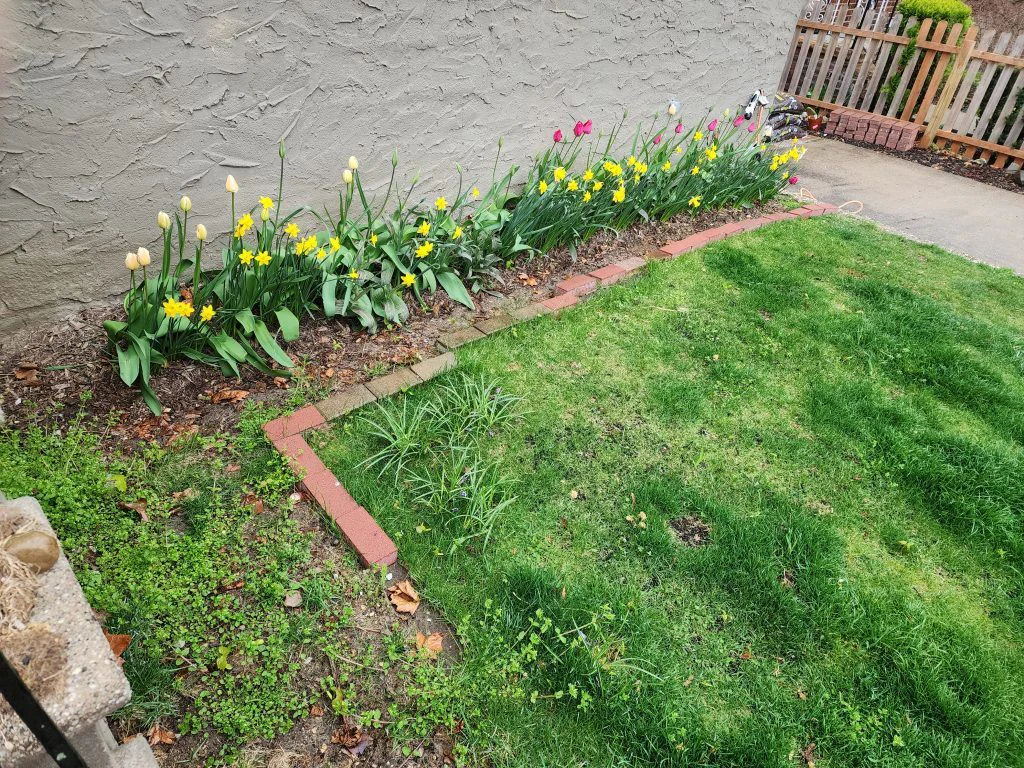
Why re-do the edge at all?
The beds on either side of the stairway to the front door hold the daffodils and tulips. They had a lot of weeds and grass, and the bricks I’d bought for edging were just piled there. With the flowers in bloom, it was time to tidy the area in front of them.
I love a well-defined border. To me it works the way a good frame does for a painting.
Cutting out the grass
First I removed all the bricks on one side — they were in the way, and I hadn’t decided yet whether they’d sit level with the grass or raised above it. Then I started cutting with the half-moon edger, taking out squares roughly 10 to 12 inches across, sliding the edger under the sod and lifting it.
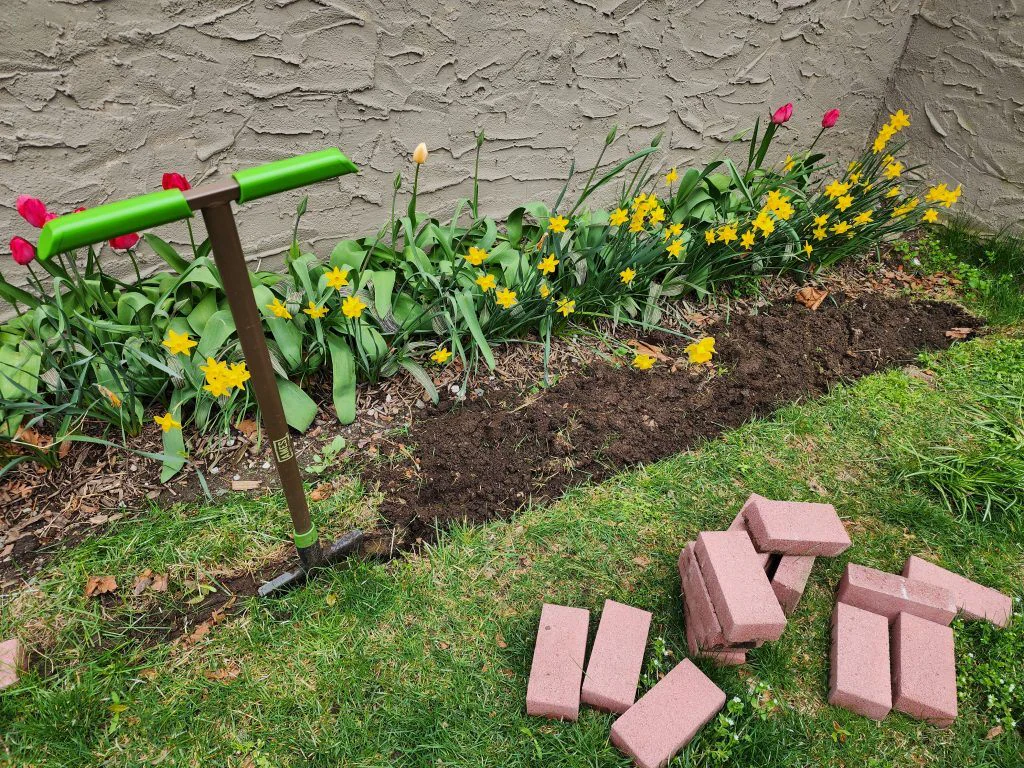
I used my hori hori to knock the soil off each piece of sod before tossing it, to save as much soil as I could. I found a lot of worms right under the grass and put nearly all of them back into the beds.
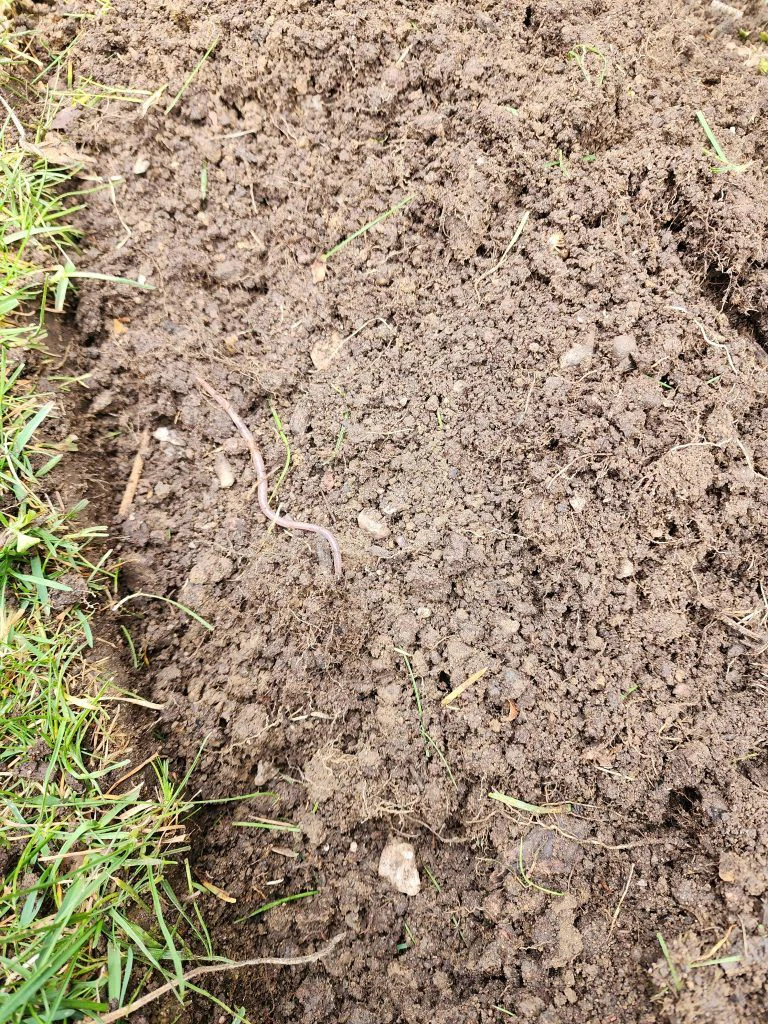
The method that didn’t work
For a while I tried slicing the sod away from the soil with the hori hori, a bit like deboning a chicken — working the blade between the roots and the dirt to keep every bit of soil. It was far too tedious. One of my goals this year is to stop being tedious and do things in an easier way, and here I was breaking my own rule. I also found out hori horis are very sharp, and sliced my thumb.
The method that did
I switched to using the half-moon edger like a spade. I’d sink the blade into the grass, loosen the soil, and fold the sod over on itself, cutting the roots as I went. It worked fine — you can see it in the photos.
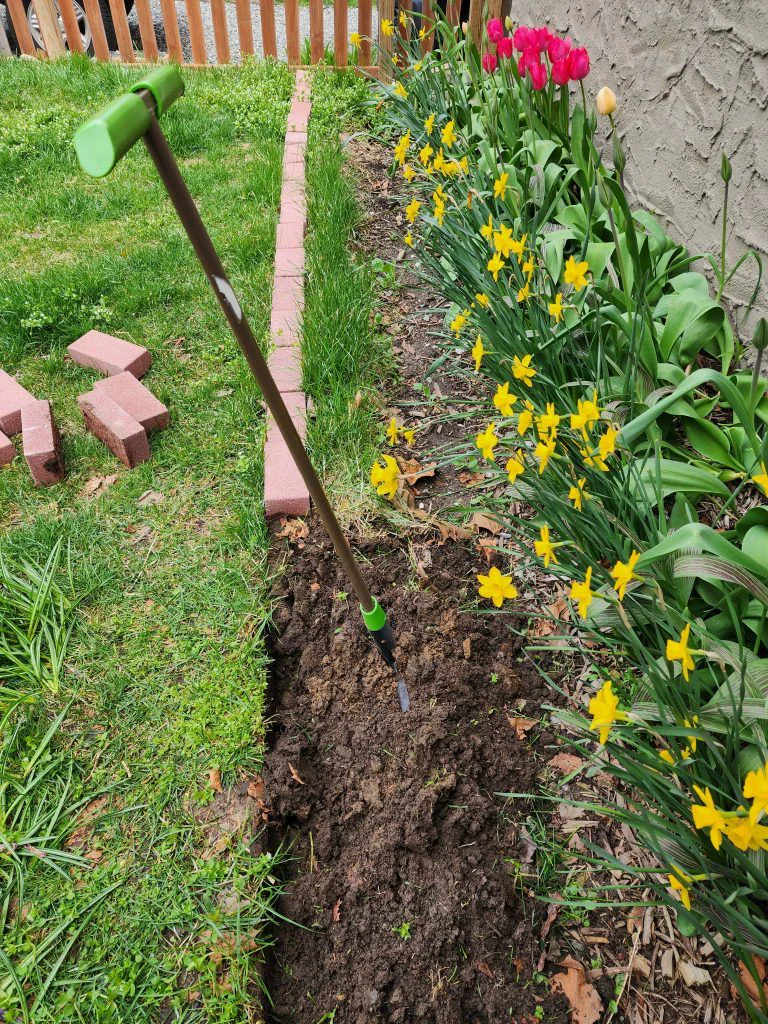
I’m not putting wood-chip mulch on this bed. I’m keeping it as soil and hoeing it when weeds come up, so I need the soil loose enough for a hoe to run through easily. The half-moon edger suits me because most of the effort goes through my foot and body weight, not my back.
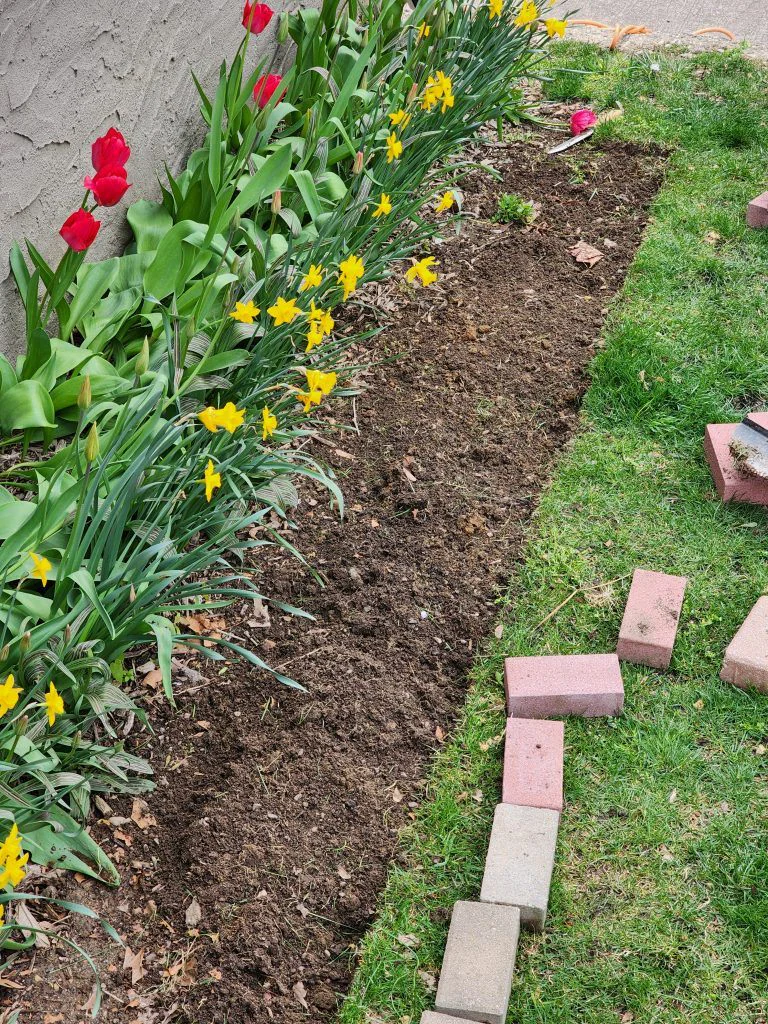
Setting the bricks so they actually show
Then the bricks. I first set them level with the grass — actually slightly under. When I backed up to the pathway to the front door, the view I design from, I couldn’t see any bricks at all. That’s not what I bought them for. I didn’t want a mowing strip.
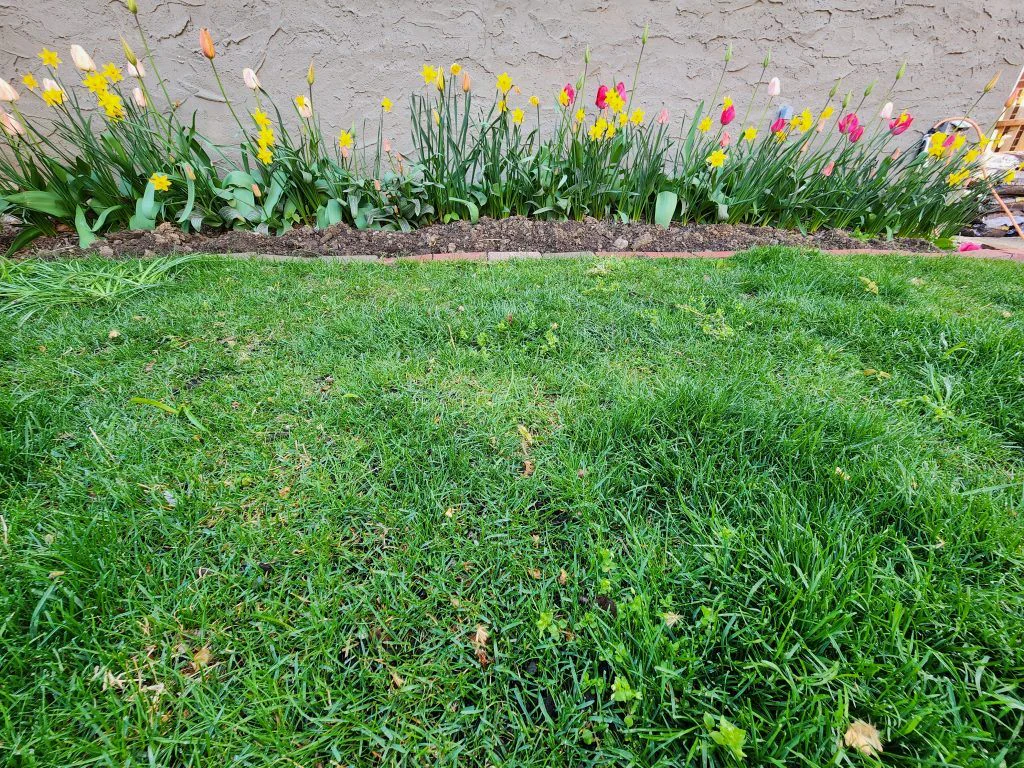
So I put some soil back along the edge where the grass ended and set the bricks on top of it, raising them so they’re visible and read as a decorative border.
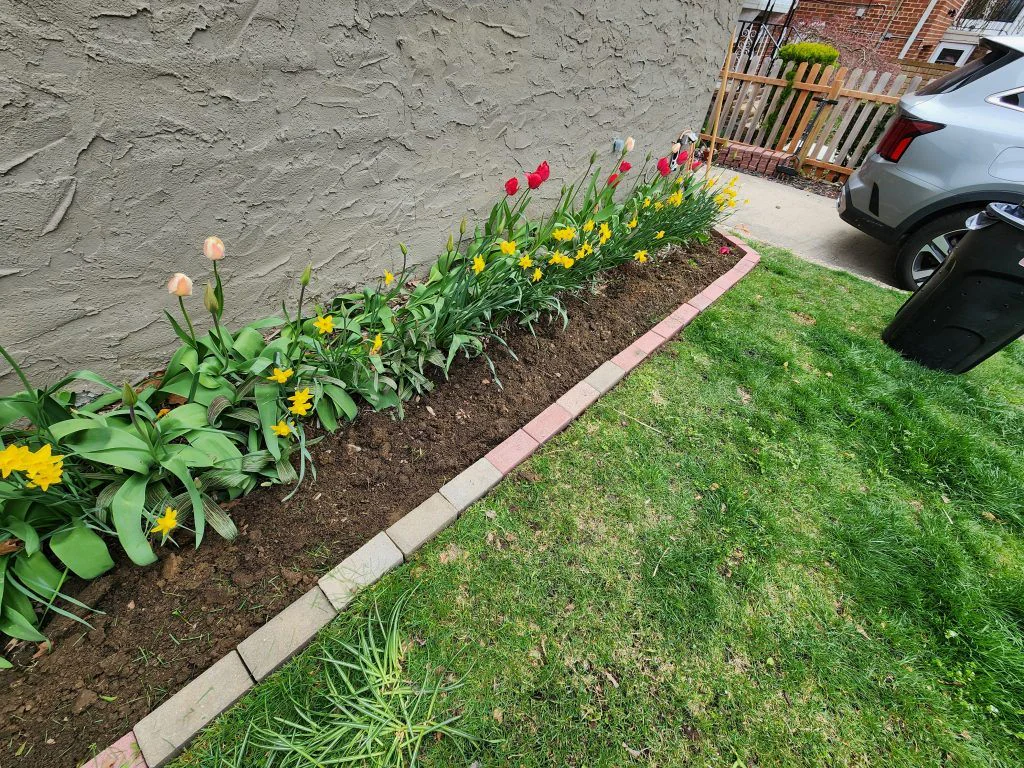
That means some hand-trimming to maintain. But in my experience every edge needs it — natural grass edge or hardscape, you still have to cut the grass that grows over or against it where the mower can’t reach.
Where it stands
The edge is in, the bricks are where I want them, the soil is raked out, and it looks neat. If I still like the brick edging at the end of the season, I can set it permanently with mortar. For now I’ll keep it this way and see how it goes.
If you’d like to follow along with the rest of the garden this season, get on my email list.
Common questions
- What is the easiest tool for cutting a clean bed edge?
- A half-moon edger. Most of the work is done with your foot and body weight rather than your back, so it's more ergonomic than a knife or trowel. You can also use it like a spade to loosen and flip out unwanted grass.
- Should garden edging bricks sit level with the lawn or above it?
- It depends on the job. Level or slightly sunk makes a mowing strip you can run a mower wheel along. Raised so the bricks are clearly visible turns the border into a decorative frame — but you'll need to trim along it by hand.
- Do you still have to trim a bed edge if you install a hard border?
- Yes. Whether the edge is cut grass or a hardscape border, grass grows horizontally over it or presses against it where the mower can't reach. A tidy line always needs a trimmer or an edger to maintain.