
Why I Don't Like Using Wood Chips in My Garden
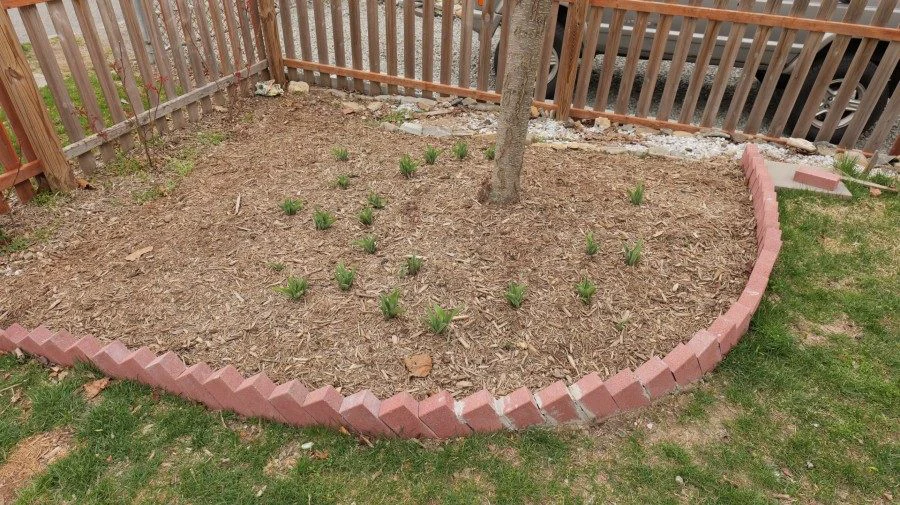
I started a wood-chip path in my back garden, spread five bags, and stopped. I’m not sure I like it, so I want to sit with it. More than that — working with those five bags, I decided I don’t like working with wood chips at all. This is the honest reasoning, and the two places I still use them.
Are wood chips really “natural”?
Not the way people mean it. Wood is natural, but large areas of shredded or chipped wood are a processed, man-made product. In nature a tree falls, a branch breaks, some bark flakes off — you don’t find a bed’s worth of uniform chips spread across the forest floor. Just an observation.
How most people actually use wood chips
Usually as a mulch you lay once and never touch again. The plan seems to be: spread the chips, then pull whatever weeds come through. There’s no cultivation after that. Where I live, often no weeding happens at all — whatever grass or weed pushes through the chips just stays there all year. That’s fine for people who don’t spend much time in the garden. I can’t do it. A weedy bed bothers me; I think it looks unkempt.
And in most modern applications there’s a step first: cardboard or newspaper laid down, then chips on top. The paper is doing the real weed-blocking — the chips are mostly there to hide the cardboard.
I hate working with cardboard and newspaper
If there’s the slightest wind, the sheets lift and try to blow away. You pin them with your hands and feet, reach for bricks, play Twister with your own body weight, and then a sheet escapes and you’re chasing it across the garden like a Charlie Chaplin bit. You can wet it down to hold it, but now you need the hose or a bucket — another hassle.
That said: in my experience, chips with newspaper under them do hold weeds back better than chips alone — unless you use a very thick layer. And by thick I mean when you think it’s thick enough, you probably need twice that.
The cost problem
A thick layer suppresses weeds, but chips are expensive by the bag. For a 20 ft × 10 ft bed at 12 inches deep:
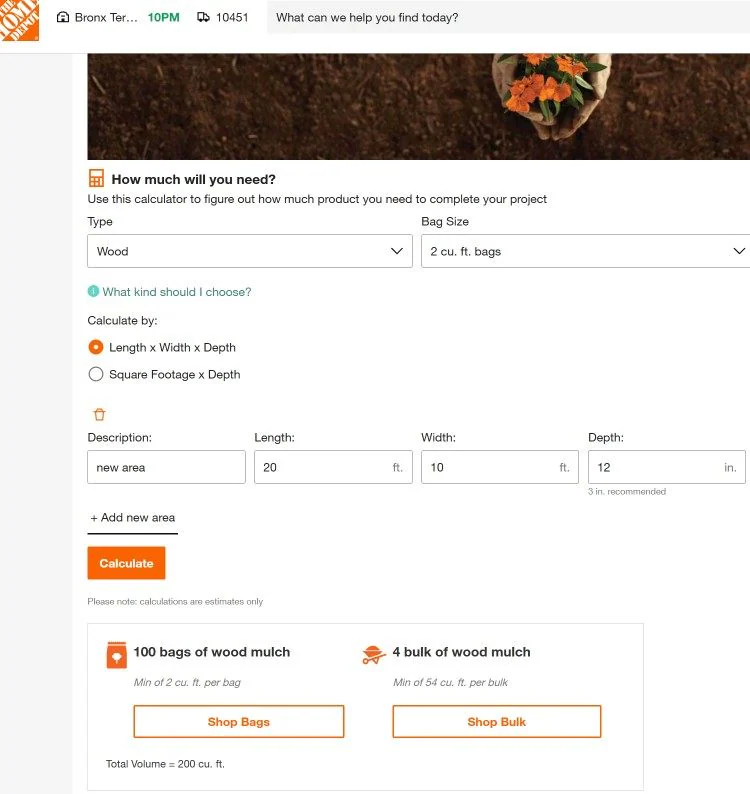
Say 12 inches is overkill and you use the commonly recommended 3 inches:

The benefits — and my honest response to each
- Retains soil moisture. True, but in my gardens dry soil has never really been a problem, so this isn’t a big benefit for me.
- Suppresses weeds. The key word is helps. Chips don’t prevent weeds; seed still germinates in and through them.
- Feeds the soil. So does every organic mulch — and wood chips are one of the slowest to break down. Cover crops, compost, straw, and manure all feed the soil faster.
- Looks good. Personal preference. To me, freshly worked bare soil looks better than a spread of chips. If you genuinely love how chips look, that may be the single best reason to use them — it’s hard to replicate.
- Free / readily available. Hard to argue with using what you have. I tried a free chip-delivery service twice and never got a delivery — too much uncertainty about when, how much, and what type.
The real reason: wood chips stop me hoeing
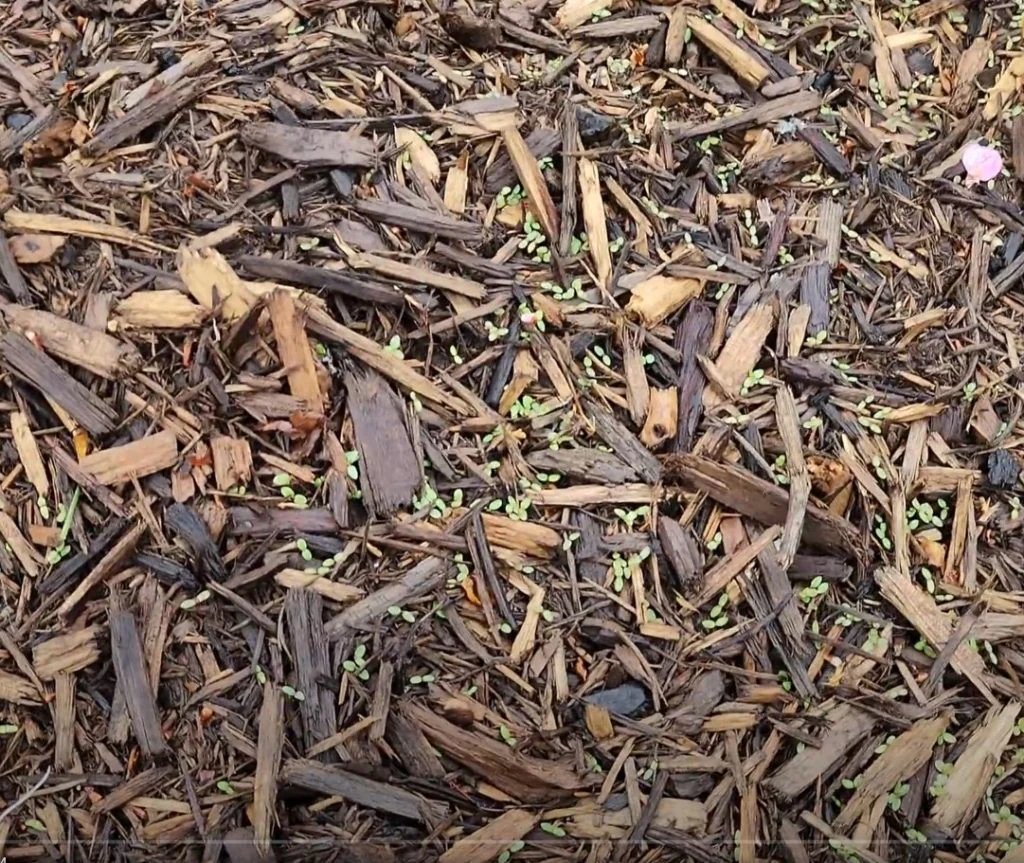
I take care of weeds mostly with a hoe. Used correctly, hoeing is quick and I find it genuinely pleasant — far less work than hauling and spreading bags of chips. You can’t run a hoe through soil that’s covered in wood chips. And if you cultivate a chipped bed, you inevitably mix chips into the soil, where they rob nitrogen from your plants as they break down.
Where I do use wood chips, and why
To prevent mud. Bare soil plus rain equals mud, and with dogs that means mud tracked into the house. Chips on top of soil stay walkable and don’t get muddy.
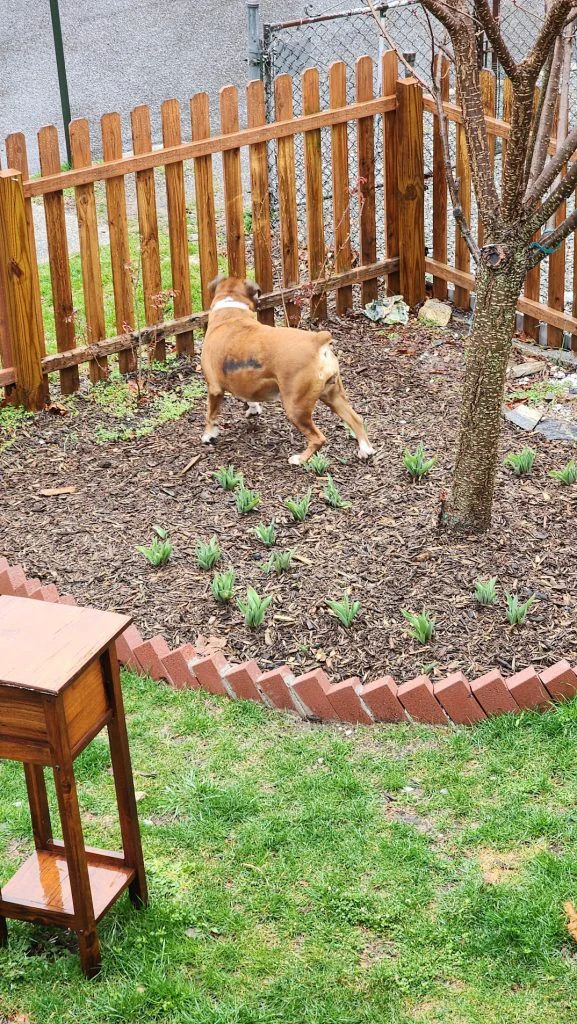
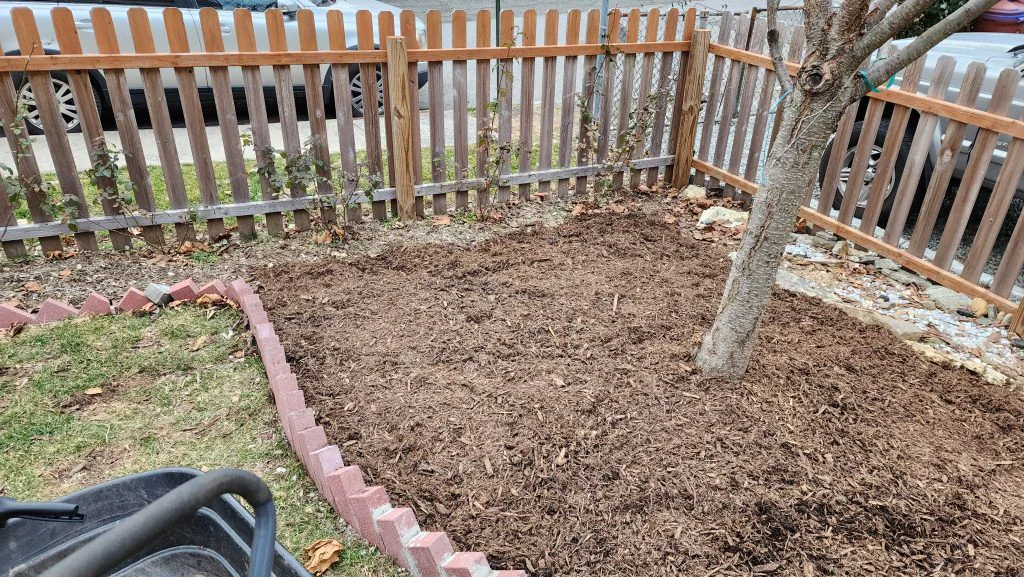
To retire a hard-to-mow corner. The front corner of my property was grass — uneven, under a tree, odd borders, a pain to get the mower around. I dug out as much lawn as I could (electric tiller for help) and chipped it, hoping to barely tend it this season.
What I use instead
On vegetable beds I use no mulch at all — bare soil, a hoe, frequent light cultivation. Vegetables are annuals, so there’s constant planting and clearing; mulch, especially chips, would just be one more thing to keep moving.
When I do mulch, I’d rather use compost — you can sow and transplant straight into it and cultivate it without worrying about it fouling the soil — or straw, which is lighter, breaks down fast, and is far gentler on soil if it gets mixed in.
The one place chips genuinely win is paths and anywhere you’ll never cultivate: comfortable underfoot, good drainage, and unlike straw they don’t get slippery or float away in heavy rain. Larger chunks last longer — but lay them only after the permanent plants are in, because moving chunky mulch to plant underneath it is no fun.
There’s no right answer here
Maybe one of those benefits is huge for you — then you should use chips. You might love working with wood chips the way I love weeding with a hoe. There’s no right or wrong. Only what works for me, and what works for you.
If you like this kind of think-it-through-in-the-garden writing, get on my email list.
Common questions
- Do wood chips stop weeds?
- They reduce weeds, they don't stop them. Weed and grass seed still germinates in and under a normal 3-inch layer. Most of the weed suppression in a modern wood-chip bed actually comes from the cardboard or newspaper laid underneath — the chips mostly just hide the paper.
- Why do wood chips cause problems if they're mixed into the soil?
- Wood is high in carbon and low in nitrogen, so as it decomposes soil microbes pull nitrogen from the surrounding soil to break it down — the same nitrogen your plants need. Compost and straw break down far faster and are much less disruptive if they get worked in.
- When are wood chips actually the right choice?
- On paths and other areas you never plan to cultivate. They're comfortable to walk on, drain well, don't get muddy, and — unlike straw — don't float away in heavy rain or get slippery. Larger chunks last longer, but lay them only after the permanent plants are already in.
- What does Ethan use instead of wood chips?
- Nothing at all on vegetable beds — just bare soil kept clean with a hoe and frequent light cultivation. Where he does mulch, he prefers compost (you can plant and cultivate straight into it) or straw (breaks down fast and is gentler on soil if mixed in).